Latest News

Posted on Monday 18th March 2013
JEANNIE CORNWELL - A TRIBUTE

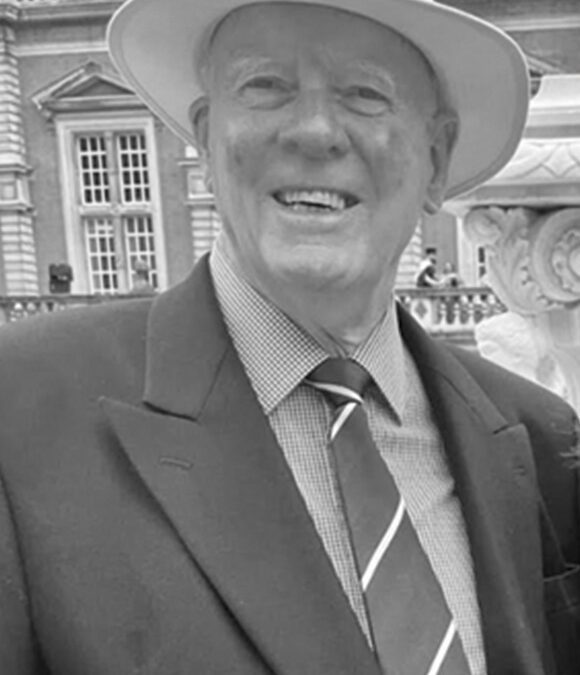
It is with regret that we report the passing of Jeannie, who was a Life Vice-President of the Society. Jeannie had been a member of the choir since 1947 – singing under six of the seven Musical Directors that the choir has had since its formation in 1899! She was a Committee member from 1975 and was elected President in 1985. Her husband Frank had also been President of the Society, from 1973 to 1975. Kit Mockett, who wrote the Centenary book, published in 1999, remembers Jeannie as a very caring, considerate and perceptive person, with great charm and an impish sense of humour.

Jeannie was born in South Gosforth, Newcastle on Valentine’s Day 1924, and she lived there with her parents and younger brothers until she left home to come to Kidderminster. She excelled at school, becoming head girl in her final year. Unusually for a young woman from a modest background at that time she continued her education, graduating with an honours degree in History from King’s College Newcastle, which was then part of Durham University.

In 1945 Jeannie took up a teaching post at Bennett Street Primary School where she taught the older children and later became deputy head. When she moved Jeannie joined Baxter Church which was to be her spiritual home for the rest of her life. She joined the Choir and became a teacher in the Sunday School, adding a bit of glamour to the congregation in those days. Jeannie contributed to the life of the church in many ways.

Jeannie felt highly honoured when she was invited to be President of the Choral Society. She also served as a magistrate for many years, becoming Chairman of the Bench. During school holidays she enjoyed many foreign holidays visiting the States, Nigeria and Singapore as well as other locations.

In 1973 Jeannie retired from teaching and married Frank, acquiring a new ready made family of three stepdaughters, their husbands and three grandchildren. By the time she died there were nine grandchildren and 11 great-grandchildren. They both marked O level English papers and Jeannie became a team leader for the examining board.

When Frank had to stop driving because of failing eyesight and Jeannie was in her 60’s she took driving lessons and though it took her a while she persevered and finally passed her test. She enjoyed driving and tackled the journey to Newcastle several times as well as braving the M25 round London. She volunteered for the National Trust and was on regular duty at Dudmaston Hall for many years. She and Frank went to the Three Choirs Festival each year and Jeannie continued to do this after Frank died for as long as she was able to manage physically. After Frank's death she travelled again and visited her pen-friend in the United States whom she had never met despite exchanging letters with her over many years.

In later years, despite being confined to a wheel chair, she kept busy. She enjoyed certain television programmes – over which she was very discriminating; she read widely, did cryptic crosswords and latterly took to Sudoku puzzles. She was a very special person who lived her life to the full and touched the lives of many people.

Posted on Wednesday 15th August 2012
CROWN IMPERIAL - BIRMINGHAM POST REVIEW

For the second time this year Christopher Morley has reviewed our concert, this time "Crown Imperial", in July, and you can read his report here.

Posted on Tuesday 10th April 2012
PASSION AND PROTEST - BIRMINGHAM POST AND KIDDERMINSTER SHUTTLE REVIEWS OF THE CONCERT

We were very pleased that Christopher Morley, of the Birmingham Post, was able to review the concert, and his write-up can be found here.

William Tomaney, from the Kidderminster Shuttle, also reviewed the concert, and his report can be viewed here.

Posted on Friday 10th February 2012
KODÁLY AND TIPPETT

We are grateful to Jane Handley for these notes of the talk given by Geoffrey Weaver on Tuesday 31st January

PSALMUS HUNGARICUS   Zoltán Kodály  1882 - 1967

Kodály had a strong sense of pride in his country.  Together with Bela Bartok he had travelled throughout Hungary collecting folk songs and possessed a strong sense of national identity with his homeland.

Psalmus Hungaricus was written in 1923 on the 50th anniversary of the union of Buda and Pest and was a passionate protest against the dismemberment of Hungary following WW1 when Hungary lost both Slovakia and Transylvania.  The piece expresses his anger at this event. The text is a sixteenth century free translation of Psalm 55 by the poet Michael Veg.

There are 3 main themes which all emerge in the first 18 pages.  The main theme appears on page 3, “When as King David sore was afflicted” this theme is repeated throughout the work on pages 7 and 32. It is folksong like in character, it is the key theme which unifies the work, the repeated rhythm appears again on page 23 where it is altered to express Kodály’s anger.

The sighing, lamenting figure of the second theme appears on pages 11 and 14 in both orchestra and voice and in the tenor solo, page 9

The third theme, that of longing, is in the orchestra in the opening passage and again on page 17 where we hear the sighing effect within the orchestration.

The first section is very turbulent. The middle section is much calmer with Psalm 46 “So in Jehovah I will put my trust” appearing firstly in the orchestra and then taken up by the choir.

This is followed by a section reflecting violence, suffering and uncertainty in the music.

In the final section the music changes from warmth at “as for the righteous” to another angular outburst “those that are mighty” before the music subsides and the opening theme is recalled.

Back to top

A CHILD OF OUR TIME   Michael Tippett   1905 – 1998

The depression of the 1920s and the rise of Nazism in the 30s gave Tippett a profound social and political awareness. He joined the Communist party for a time but left when he failed to convert his local branch to Trotskyism.

He wanted to use his art to express solidarity with the oppressed and in 1938 he heard the story of a Polish student, Herschel Grynsban, living in Paris, who had heard from his father of the persecution of his family and of the Jews in general by the Nazis back home in Poland. Grynsban’s response was to go out and kill a Nazi diplomat in Paris.

This resulted in the savage outbreak of violence against the Jews across Europe which began on “Kristallnacht”

Tippett resolved to write a work of protest. He asked his friend T S Eliot to write the libretto, but Eliot suggested Tippett write his own libretto, partly because Tippett already had a good idea of the shape of the work and partly because Eliot feared that his libretto might overwhelm the music!

Tippett wrote his own libretto taking as his model the Bach Passions and to some extent Handel’s “Messiah” using the baroque device of recitative and, in place of chorales, negro spirituals. Another influence was the film “Green Pastures” where “de Lawd looks down from heaven”. That film may also have prompted him in his decision to use spirituals.

The negro spirituals are the emotional heart of the piece, they come out of great tribulation, the negro slaves are forced to the knees to cry out.

Part 1

This deals with oppression in the world. All is confusion as the people sing “We are lost” the music is almost atonal. In chorus 5 the music has a ‘slithery’ effect - people cannot get a grip on life. The tenor sings of the plight of the poor, the soprano soloist in anguish sings “How shall I feed my children?” a lament that is tragically relevant to our times for mothers in the Horn of Africa. The section ends with the comfort of the spiritual “Steal away to Jesus”

Part 2

In No. 9 we are introduced to “the man” the child of our time, Grynsban. But before the assassination there is the persecution which led Grynsban to despair and violence. In No. 11 there are hints of some of the “Crucify” choruses in the St Matthew Passion and, in chorus 13, a clear reference to ethnic cleansing.  The boy is driven to shoot a representative of the oppressors. Chorus 19 is very violent and angular “break them in pieces on the wheel”. This is followed by No. 21 A Spiritual of Anger: “Let my people go”, the archetypal song of protest ending with the powerful “Go down Moses”

Part 3

Reflects on how release and liberation might come p.78 “the jewel of great price lies in the icy waters”. p.87 “winter cold means inner warmth”. The secret is hidden and people are impatient p.88. The message seems to be that wholeness and peace will come, but as Eliot says “the meaning is in the waiting”. In the final ensemble No. 29, the soloists sing of longing for wholeness and the hope that is there in the moving waters and “it is Spring” a contrast with the winter of the opening. After the choir the soloists embark on an ecstatic section and “Deep river” brings a measure of the wholeness and peace which are the hope and goal of all humanity.

Based on notes taken at the talk on 31st January together with original material supplied by Geoffrey Weaver.

Any errors are those of the scribe.

Back to top

Posted on Friday 2nd September 2011
WYRE FOREST YOUNG VOICES - PROGRAMME FOR 2012-2013

Wyre Forest Young Voices have another full programme for the coming year. They will take part in the Gala Christmas Concert on December 22, and will also present their own concerts (with Primary Chords) on November 16 and March 15 - full details can be viewed on our "Programme" pages.

Older members of the choir will take part in the annual "Graduates' Weekend" early in January, when they and former members of the choir will come together for two days' singing and fun, culminating in a concert at Baxter Church Hall. Yet to be confirmed is a performance by the Young Voices Chorale, in St. Mary's Church, Kidderminster, on Sunday February 10 of Faure's Requiem.

On July 8 the choir will sing in St. Anne's Church in Bewdley, and the concert will be followed by an "end of year" party at Bewdley Rowing Club, to which all are invited, Plans are being made for a visit, later in July, to Budapest, of which further details later.

Back to top

Posted on Friday 4th March 2011
Programme for 2012-2013

The programme for the 2012-13 Season is as follows:

September 6 - first rehearsal for November concert.

October 18 - Annual General Meeting.

November 16 - Concert by Wyre Forest Young Voices and Primary Chords - Kidderminster Town Hall, 7.00 pm.

November 24 - KCS Concert - Town Hall, 7.30 pm. Programme: Duke Ellington: Sacred Concerts; Leonard Bernstein: Chichester Psalms; George Gershwin: A Suite of Songs.

November 29 - first rehearsal for Christmas concert.

December 22 - Gala Christmas Concert - Kidderminster Town Hall, 7.00 pm.

January 3, 2013 - first rehearsal for March concert.

February 3 - "Singalong with the CBSO" - Handel's "Messiah" in Birmingham Symphony Hall.

February 10 (to be confirmed) - Faure's Requiem, by the Young Voices Chorale, in St. Mary's Church, 8.00 pm.

March 2 - Join with the City of Bristol Choir to sing Duke Ellington's "Sacred Concerts" in the Colston Hall, Bristol.

March 8 - Annual Dinner at La Brasserie, Kidderminster

March 15 - Concert by Wyre Forest Young Voices and Primary Chords - Kidderminster Town Hall, 7.00 pm.

March 16 - KCS Concert - Town Hall, 7.30 pm. Programme: Guiseppe Verdi: Requiem.

April 18 - first reheasal for Summer Singers.

April 20 - Choir Away Day at Knighton.

May 23-27 - Sing with the Theodor Storms Chor in Husum, Germany (dates provisional).

June 29 - Primary Chords Summer Concert in Baxter Church Hall.

July 7 - Wyre Forest Young Voices Concert in St. Anne's Church, Bewdley.

July 13 - Summer Singers Concert in Belbroughton Church.

Further details of programmes and ticket prices will be published as they become available.

Back to top

You can read older news in our archives.

JEANNIE CORNWELL - A TRIBUTE

CROWN IMPERIAL - BIRMINGHAM POST REVIEW

PASSION AND PROTEST - BIRMINGHAM POST AND KIDDERMINSTER SHUTTLE REVIEWS OF THE CONCERT

KODÁLY AND TIPPETT

WYRE FOREST YOUNG VOICES - PROGRAMME FOR 2012-2013

Events 2013

News 2013